VR Development Company: Custom Virtual Reality Solutions That Deliver Results

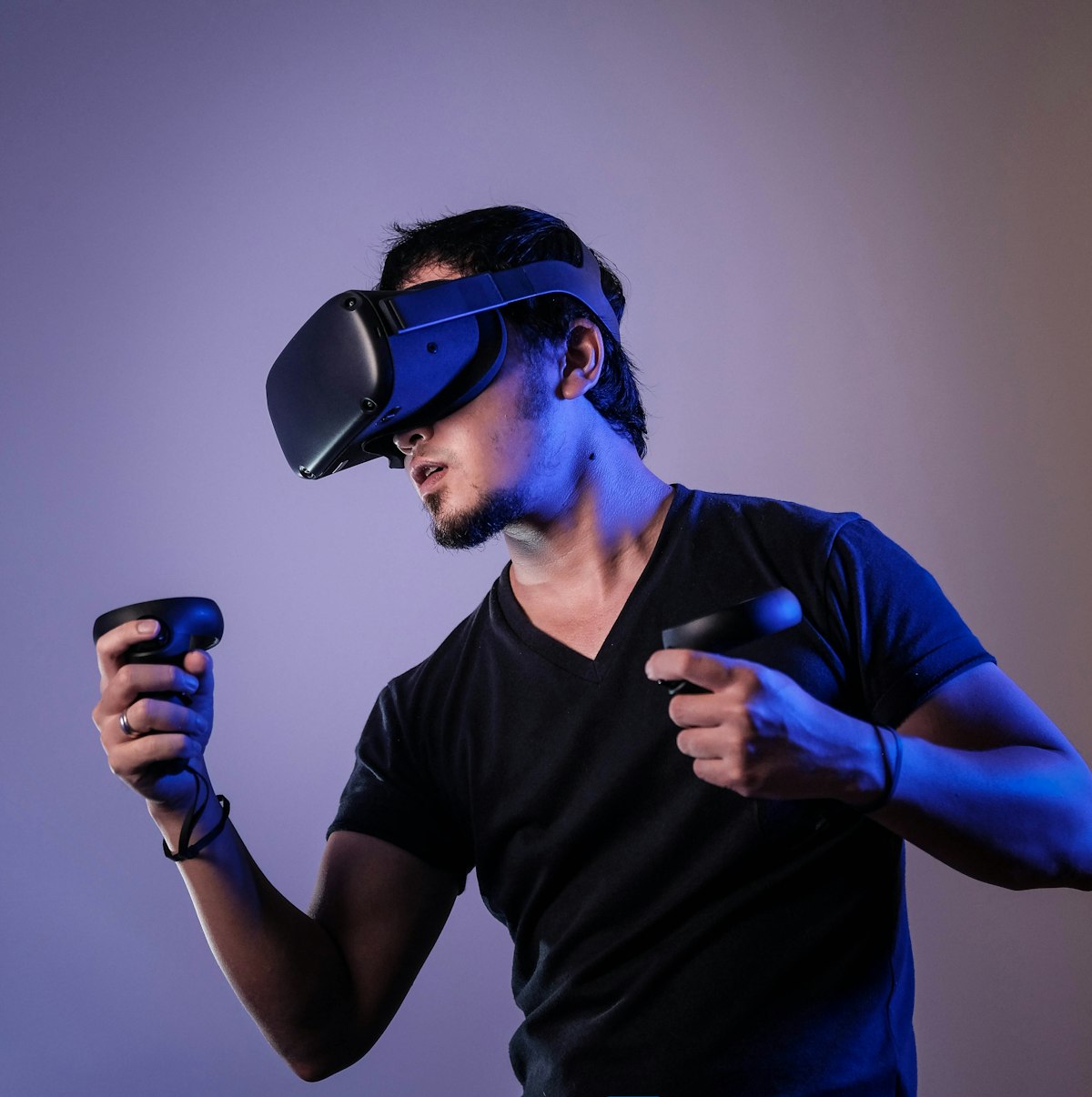
Person using VR headset experiencing spatial computing technology
BOA XR is a VR development company that builds immersive virtual reality applications for enterprises, training programmes, healthcare, real estate, education, and entertainment. Unlike generalist software agencies that list VR as one line item among dozens of services, we focus exclusively on spatial computing and XR development. That focus means every project benefits from deep platform expertise, production-tested workflows, and a team that builds in headsets every day. Whether you need a VR training simulation, a real-time architectural walkthrough, or a consumer application for Meta Quest or Apple Vision Pro, our development process covers the full lifecycle from concept through deployment and ongoing support.

Why Choose BOA XR as Your VR Development Partner

Spatial Computing DNA

BOA XR is a spatial computing studio first. VR, AR, and mixed reality are not side offerings bolted onto a web or mobile development practice. Our entire operation is built around immersive technology: the tools, the hardware, the design patterns, and the performance constraints that define this space. This matters because VR development demands specialised knowledge that generalist teams simply do not maintain. Real-time rendering optimisation, spatial interaction design, motion-to-photon latency management, and cross-platform deployment each require dedicated expertise that comes from sustained, focused practice.

Our guide to VR application development covers the full technical pipeline from platform selection through deployment, reflecting the depth of process knowledge we bring to every engagement.

Practitioner-Led Approach

As a VR development company, every project at BOA XR is led by developers and designers who work inside headsets daily. That hands-on familiarity with device behaviour, interaction quirks, and performance limits translates directly into better products. Assumptions about 3D interaction design rarely survive first contact with real hardware, so our team prototypes on-device from the earliest stages rather than relying on flat-screen previews. This approach catches interaction design problems early, when they are inexpensive to fix, rather than late in the build cycle when rework is costly.

Our VR Development Services

3D digital environment visualization representing spatial computing technology

VR Application Development

We build custom VR applications for enterprise workflows, consumer experiences, and everything in between. Enterprise applications include remote collaboration environments, digital twin visualisation, product configurators, and data visualisation systems that let teams interact with complex information in three-dimensional space. Consumer applications cover gaming, social VR, fitness, and entertainment experiences optimised for standalone and PC-tethered headsets. Our VR app development services page outlines our capabilities and process in detail.

VR Training and Safety Simulation

Training simulations are one of the highest-ROI applications of virtual reality. VR-trained employees are up to 275 percent more confident to apply skills after training, and at scale, VR training becomes 52 percent more cost-effective than classroom delivery. We build training simulations for hazardous environment preparation, equipment operation, emergency response, medical procedures, and safety compliance. Each simulation includes performance analytics so organisations can measure learning outcomes and identify skill gaps. Our guide to VR for education explores the research behind immersive learning effectiveness.

VR Game Development

VR gaming demands a unique combination of technical performance and creative design. We develop VR games for Meta Quest, SteamVR, and PlayStation VR2, handling the complete pipeline from concept art and interaction prototyping through performance optimisation and storefront submission. Our VR game development guide covers the process, tools, and design principles that make VR games compelling, while our overview of VR games currently in development tracks the broader landscape of the industry.

Architectural and Real Estate VR

We create real-time architectural walkthroughs and virtual property tours that let clients experience spaces before construction or in-person visits. Properties presented with virtual tours receive significantly more engagement than listings without them, and clients make faster, more confident decisions when they can navigate a space at their own pace. Our guide to virtual reality tour software covers the tooling options and when a custom-built solution delivers better results than off-the-shelf platforms.

Medical and Healthcare VR

Healthcare is one of the most demanding VR verticals. Surgeons using VR-based planning tools modify their original surgical approach in 60 percent of cases after reviewing 3D reconstructions, and VR-trained surgeons complete procedures 20 percent faster with 38 percent more steps performed correctly than those trained with conventional methods. We build medical visualisation systems, surgical planning tools, patient education applications, and therapeutic VR experiences for pain management and rehabilitation. Our comprehensive guide to VR for healthcare covers the research, platforms, and regulatory considerations in detail.

WebVR and WebXR Experiences

A full-service VR development company also builds for the browser. Not every VR experience requires an app download. The W3C WebXR Device API enables browser-based immersive experiences that users access through a link. We develop WebXR applications for product visualisation, interactive marketing, virtual showrooms, and educational content where frictionless access matters more than maximum visual fidelity. Browser-based delivery is particularly effective for retail and real estate, where asking customers to install an app creates a conversion barrier.
Start your VR project. Get a free consultation with our VR development architects. We will scope your project, recommend the right technology stack, and provide a transparent timeline and budget. Get in touch.

VR Development Technology Stack

Person inside immersive computing environment with spatial displays

Game Engines: Unity and Unreal

Unity is our primary engine for projects requiring broad device compatibility and rapid iteration. Approximately 60 percent of AR and VR content is built with Unity, giving it the largest ecosystem of XR development tools, assets, and community support. Our guide to Unity VR development covers the engine’s setup, optimisation techniques, and deployment workflows in depth.

Unreal Engine is our choice for projects where photorealistic rendering is the priority: architectural visualisation, automotive configurators, and cinematic VR experiences. The engine’s Nanite geometry system and Lumen global illumination deliver visual fidelity that Unity cannot match out of the box, making it the default for clients whose projects hinge on visual realism.

Hardware Platforms

Meta’s Horizon OS platform powers the Quest headset line, which captured approximately 74 percent of VR headset shipments in 2025. We develop natively for Meta Quest using the Meta SDK and also build for SteamVR (Valve Index, HTC Vive), Apple visionOS (Vision Pro), and PlayStation VR2. Our Meta Quest Developer Hub guide walks through the development environment setup, and our Meta Quest developer mode tutorial covers device configuration for sideloading and testing.

Cross-Platform Standards

The OpenXR open standard reduces cross-platform fragmentation by providing a unified API layer that targets multiple headsets from a single codebase. We use OpenXR for projects that need to ship across Quest, SteamVR, and Windows Mixed Reality simultaneously. Our guide to VR development software compares the full range of engines, SDKs, and toolkits available in 2026, helping teams evaluate which stack fits their project requirements.

Our VR Development Process

Discovery and Scoping

Every project starts with a scoping conversation where we define objectives, identify the target audience, select hardware platforms, and map out the core interactions the experience must deliver. This stage produces a technical requirements document that guides every subsequent decision.

UX Design and Prototyping

UX design translates requirements into spatial wireframes and interaction flows specific to each target headset. Prototyping moves immediately to on-device builds, because 3D interaction design must be validated in a headset, not on a flat screen. This stage typically involves rapid iteration cycles measured in days rather than weeks. Assumptions about how users will interact with 3D interfaces rarely survive first contact with real hardware.

Production Development

Production covers 3D asset creation, interaction programming, performance optimisation, and platform integration. Assets are built to strict polygon budgets and texture constraints that vary by device. Audio is spatialised using head-related transfer function profiles so that sounds originate from the correct position in 3D space.

QA Testing and Deployment

QA testing happens across every target device in representative physical environments, because SLAM behaviour, lighting conditions, and tracking accuracy vary significantly between controlled labs and real-world deployment sites. Deployment includes storefront submission (Meta Horizon Store, Steam, App Lab), enterprise device provisioning via MDM solutions, or web distribution via WebXR.

Post-Launch Support

Post-launch, we provide ongoing support, performance monitoring, platform update compatibility, and feature iteration. Headset firmware and OS updates frequently change application behaviour, so continuous compatibility testing is essential for production VR deployments.

Industries We Serve with VR Development

Augmented reality holographic display interface

Manufacturing and Industrial

Manufacturing clients use VR for equipment training, assembly line simulation, facility planning, and digital twin visualisation. VR-based training eliminates the risks and costs of training on live equipment, while virtual facility layouts let teams test floor plans before committing to physical changes.

Healthcare and Medical

Healthcare organisations deploy our medical visualisation and surgical planning tools. We also build patient education applications and therapeutic VR for pain management, rehabilitation, and exposure therapy. Regulatory requirements in this vertical demand rigorous testing, data governance, and clinical validation workflows.

Education and Training

Educational institutions use our immersive environments for anatomy training, historical reconstructions, STEM visualisation, and hazardous-environment preparation. The embodied learning effect, where students physically interact with information rather than passively observing it, produces deeper retention than traditional methods.

Real Estate, Retail, Defence, and Entertainment

Real estate firms commission virtual property tours and architectural walkthroughs. Retail brands deploy VR showrooms and product configurators. Defence organisations rely on simulation environments for tactical training and mission rehearsal. Entertainment clients need VR games, narrative experiences, and live event activations. Our guide to virtual reality applications covers how VR is deployed across 15+ industries with specific use cases and implementation considerations.

Why a Specialised VR Development Company Matters

Market Growth Demands Specialist Expertise

The global VR market is projected to reach $165 billion by 2030, growing at a compound annual rate of 31 percent. As the market matures, the gap between a generalist agency and a dedicated VR development company widens. A generalist IT outsourcer may assign a mobile developer to learn Unity in a week; a VR-first studio has team members who understand the nuances of foveated rendering, reprojection, spatial audio, and cross-platform interaction paradigms from sustained daily practice.

Technical Depth That Generalists Cannot Match

The practical difference shows up in project outcomes. VR applications that drop below 90 frames per second cause user discomfort, and low frame rates significantly increase motion sickness symptoms. Achieving sustained 90 Hz on a standalone headset with meaningful graphical fidelity requires aggressive optimisation techniques (level-of-detail systems, occlusion culling, draw call batching, texture atlasing) that are second nature to a specialist team and a learning curve for generalists. Our introduction to VR breaks down the foundational technology and concepts for organisations evaluating VR for the first time.

VR Development Engagement Models and Pricing

Fixed Price

Fixed-price engagements work best for well-defined projects with clear scope: a training simulation with known scenarios, a virtual tour of a specific property, or a product configurator with a fixed feature set. This model provides budget certainty and a clearly defined deliverable timeline.

Time and Materials

Time-and-materials engagements suit exploratory or iterative projects where requirements evolve through user testing. This model gives teams the flexibility to adjust scope, pivot based on user feedback, and expand features without renegotiating a fixed contract.

Dedicated Team

Dedicated team engagements provide ongoing VR development capacity for organisations with continuous development needs. This model embeds our developers and designers into your workflow for sustained product development, platform updates, and content iteration.

Pricing Benchmarks

Industry benchmarks place VR development project costs at varying levels depending on complexity and scope. Proof-of-concept projects typically range from $30,000 to $80,000, depending on platform count and interaction complexity. Full production applications for enterprise deployment typically cost $150,000 to $500,000 or more, driven by visual fidelity requirements, number of target platforms, backend integration needs, and 3D asset volume. We provide transparent estimates during the discovery phase and scope projects to avoid surprises. Our AR/VR development services and AR/VR app development pages detail our service offerings across different project types.
Ready to build? Schedule a free consultation with our VR development architects. We will discuss your objectives, evaluate platform options, and outline a development approach tailored to your requirements.

Frequently Asked Questions About VR Development

A VR development company designs, builds, and deploys virtual reality applications for businesses and consumers. Services typically include VR app development, 3D content creation, UX design for immersive environments, performance optimisation, and deployment across platforms like Meta Quest, SteamVR, Apple Vision Pro, and WebXR. A specialised VR company maintains deep expertise in real-time rendering, spatial interaction, and device-specific constraints that generalist software firms do not.
Proof-of-concept VR projects typically range from $30,000 to $80,000. Full production enterprise applications cost $150,000 to $500,000 or more depending on complexity, platform count, visual fidelity, backend integration, and 3D asset requirements. Key cost drivers include the number of target headsets, whether photorealistic or stylised graphics are needed, and the depth of backend systems integration. Contact our team for a scoping conversation tailored to your project.
A proof-of-concept typically takes 6 to 12 weeks. A full production VR application takes 4 to 12 months depending on scope, platform count, and content volume. Training simulations with multiple scenarios and analytics integration tend toward the longer end. Iterative development with on-device testing throughout keeps timelines realistic and catches issues early.
We develop for Meta Quest (Quest 3, Quest 3S, Quest Pro), SteamVR (Valve Index, HTC Vive, Windows Mixed Reality), Apple Vision Pro (visionOS), PlayStation VR2, and browser-based WebXR. We also build cross-platform applications using OpenXR for maximum device compatibility.
Both. Our enterprise work includes training simulations, digital twins, remote collaboration, and medical visualisation. Our consumer work covers VR games, fitness applications, social VR, and entertainment experiences. The development approach differs: enterprise projects emphasise reliability, analytics, and device management; consumer projects emphasise visual polish, engagement, and storefront optimisation.
A VR development company specialises in the unique technical challenges of immersive applications: real-time 3D rendering, spatial interaction design, motion sickness prevention, cross-device performance optimisation, and spatial audio. General software companies may assign developers to learn VR tooling as needed, but they lack the accumulated expertise, hardware inventory, and production-tested workflows that a specialist studio maintains.
Yes. VR training simulation is one of our core service areas. We build simulations for hazardous environment preparation, medical procedures, equipment operation, emergency response, and compliance training. Each simulation includes performance tracking and analytics to measure learning outcomes and skill retention over time.
Both, chosen based on project requirements. Unity is our default for projects requiring broad device compatibility, rapid iteration, and integration with enterprise systems. Unreal Engine is our choice when photorealistic rendering is the priority, such as architectural visualisation, automotive configurators, and cinematic VR. We evaluate the tradeoffs during every scoping phase.
Yes. Post-launch support includes performance monitoring, platform update compatibility (headset firmware and OS updates frequently change behaviour), bug fixes, content updates, and feature iteration. We offer ongoing retainer arrangements for organisations with continuous VR development needs.
Start with a free consultation. We will discuss your objectives, evaluate the right platforms and technology stack, define the scope, and provide a transparent timeline and budget estimate. Reach out to our team to schedule a scoping conversation.

Looking for a VR development company that builds in headsets every day? Get in touch to discuss your project.